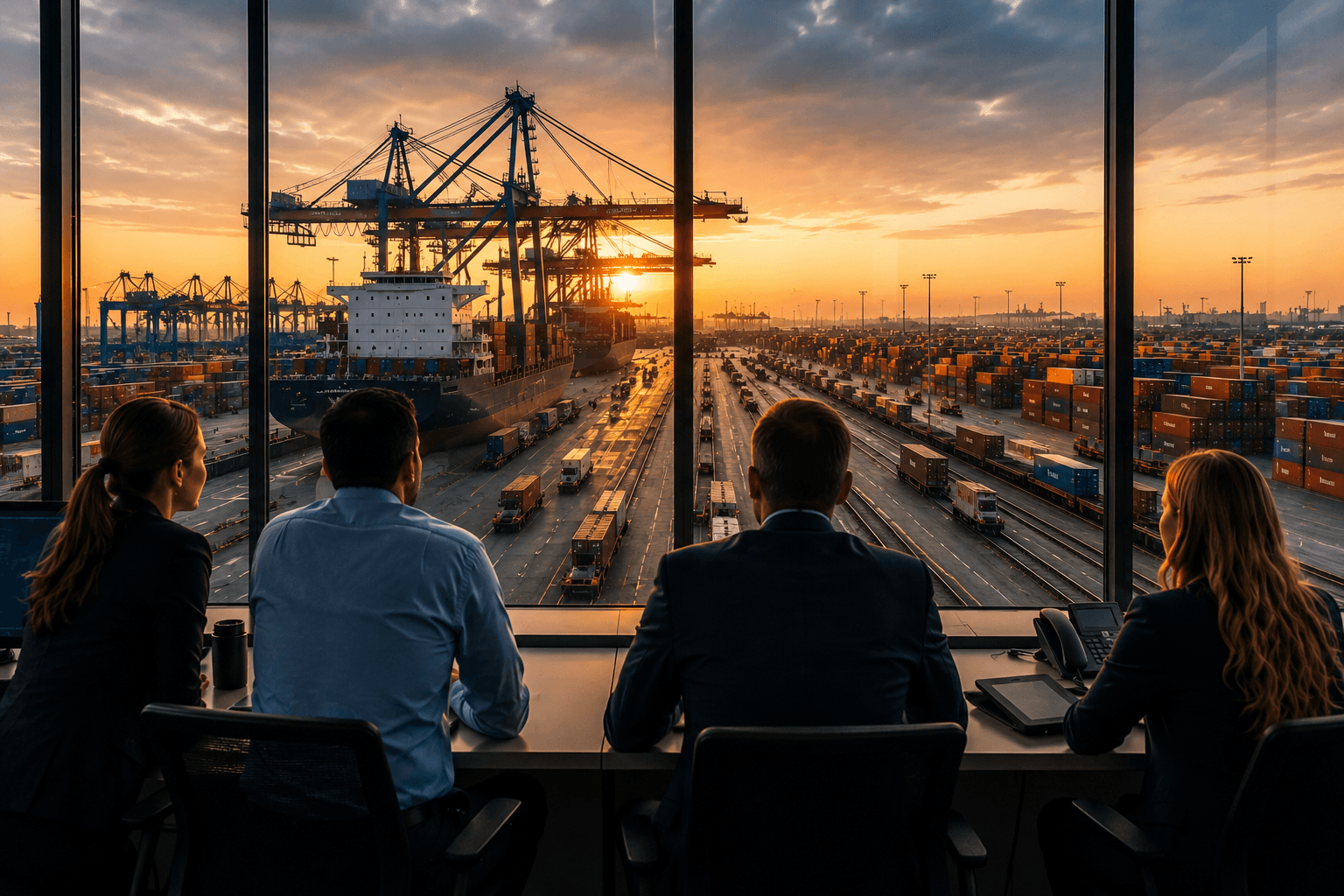
Why Supply Chains Have Become a Strategic Priority
For decades, businesses optimized supply chains around one primary objective: efficiency. Companies sourced materials from the lowest-cost locations, minimized inventory levels, and relied on highly interconnected global networks to reduce expenses and maximize profitability.
That model delivered significant economic benefits. It helped lower costs, expanded international trade, and supported the growth of global manufacturing hubs. However, recent disruptions have exposed the vulnerabilities of supply chains built primarily for efficiency rather than resilience.
Today, geopolitical tensions, regional conflicts, trade restrictions, and strategic competition between major economies are creating new challenges for businesses. Supply chains are no longer viewed simply as operational functions; they have become strategic assets that directly influence competitiveness, profitability, and national economic security.
Background and Context
Globalization transformed supply chains over the past several decades. Advances in transportation, digital communication, and international trade agreements enabled companies to source components and products from virtually anywhere in the world.
This interconnected system increased productivity and lowered costs. However, it also created dependencies on specific regions, suppliers, and transportation corridors. When disruptions occur, the effects can quickly spread across industries and national borders.
Recent years have demonstrated how fragile these networks can be. Supply shortages, transportation bottlenecks, export controls, and political tensions have disrupted industries ranging from electronics and automotive manufacturing to pharmaceuticals and consumer goods.
As a result, resilience has become a central concern for corporate leaders and policymakers alike.
Main Drivers Behind the Issue
One of the most significant drivers is rising geopolitical competition. Governments are increasingly viewing critical industries, technologies, and supply chains through the lens of national security. This has contributed to trade restrictions, investment reviews, export controls, and efforts to reduce strategic dependencies.
Another factor is the concentration of production in specific regions. Many industries rely heavily on a limited number of suppliers or manufacturing centers. While this concentration often improves efficiency, it can increase vulnerability when disruptions occur.
Changing trade policies are also influencing corporate decisions. Businesses must navigate evolving regulations, tariffs, sanctions, and compliance requirements that can alter supply chain economics almost overnight.
Climate-related events add further complexity. Extreme weather, natural disasters, and environmental pressures can disrupt transportation networks, production facilities, and access to critical resources.
Technology is also reshaping supply chain management. Digital tools provide greater visibility across global networks, helping organizations identify risks and respond more quickly to disruptions.
Impact on Businesses, Markets, Governments, and Society
For businesses, resilience is becoming a competitive advantage. Companies are increasingly diversifying suppliers, expanding inventory buffers, and adopting multi-region sourcing strategies. While these measures may increase short-term costs, they can reduce exposure to major disruptions and improve long-term stability.
Manufacturers are reassessing where production should occur. Some are pursuing regionalization strategies that bring operations closer to customers, while others are expanding supplier networks across multiple countries to reduce concentration risk.
Financial markets are paying closer attention to supply chain vulnerabilities as investors evaluate corporate resilience alongside traditional performance metrics. Companies with stronger risk-management capabilities may be viewed as better positioned to navigate uncertainty.
Governments are also becoming more involved. Policymakers are encouraging domestic production in strategic sectors, investing in infrastructure, and supporting supply chain security initiatives. These efforts aim to strengthen economic resilience while reducing dependence on critical external suppliers.
For consumers, resilient supply chains can help reduce product shortages and limit sudden price increases during periods of disruption. Although greater resilience may sometimes result in higher operating costs, many businesses and governments increasingly view those costs as necessary investments in stability.
Future Outlook
The future of global supply chains is unlikely to involve a complete retreat from globalization. International trade remains essential for economic growth, innovation, and access to specialized resources.
Instead, the next phase is likely to focus on diversification rather than dependence. Companies will continue operating globally but may rely on broader supplier networks and more geographically distributed production systems.
Technology will play a growing role in this transformation. Artificial intelligence, predictive analytics, digital twins, and real-time monitoring systems can help organizations anticipate disruptions and make faster decisions.
Regional supply chain ecosystems may also become more important. Businesses are expected to balance global reach with regional resilience, creating networks that can adapt more effectively to changing economic and political conditions.
The organizations most likely to succeed will be those that treat resilience as a long-term strategic investment rather than a short-term operational expense.
Bigger Picture
The debate over supply chain resilience reflects a broader shift in how businesses and governments think about risk. For years, efficiency dominated decision-making. Today, resilience is emerging as an equally important objective.
In an increasingly uncertain world, the ability to withstand disruption may become just as valuable as the ability to grow quickly. Companies that build flexible, diversified, and technology-enabled supply chains will be better positioned to navigate geopolitical uncertainty and changing market conditions.
The future of global commerce will not be defined solely by how efficiently goods move across borders. It will also be shaped by how effectively businesses and governments prepare for the unexpected.
Leave A Reply
Your email address will not be published.*