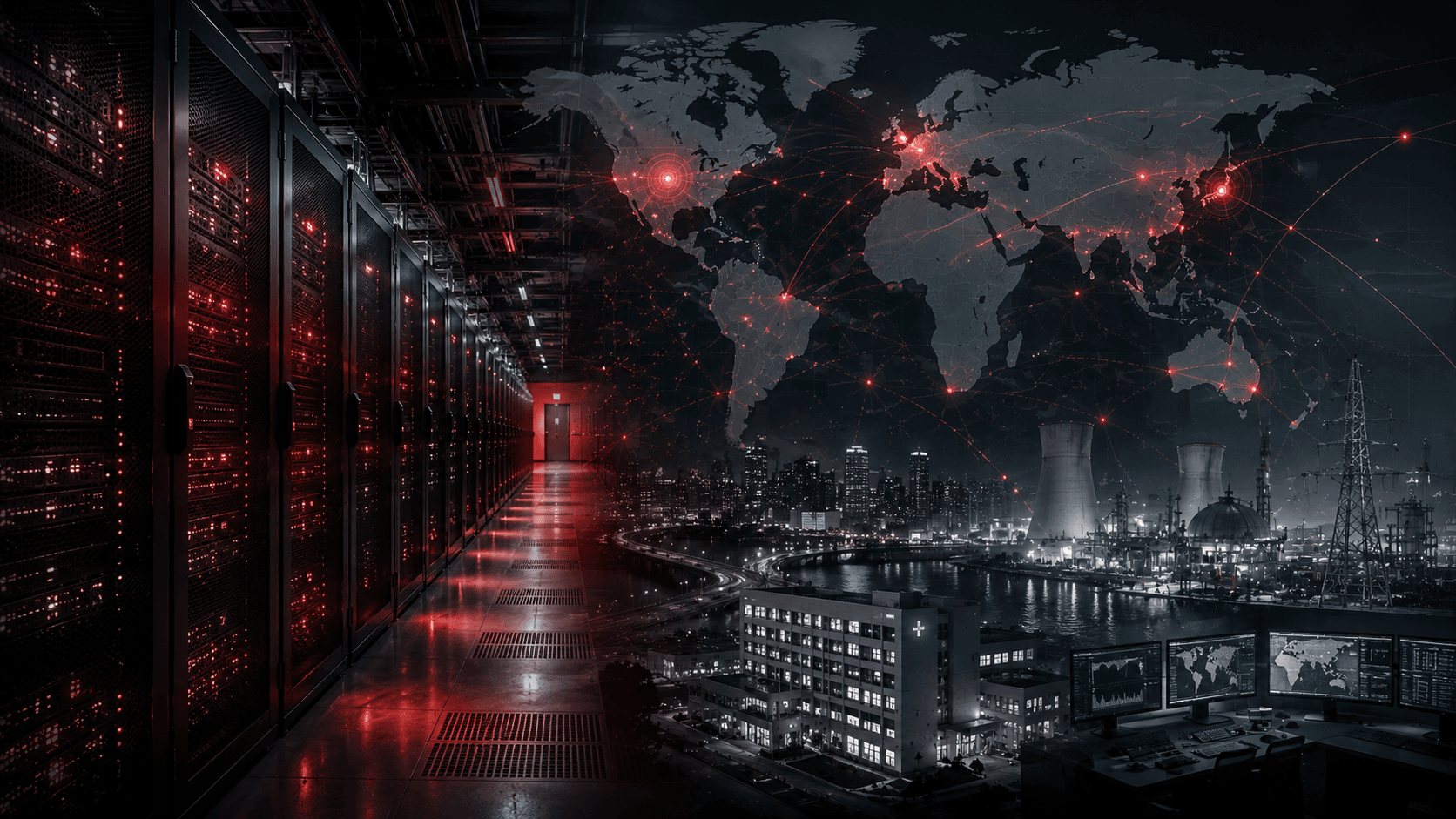
The Global Cybersecurity Crisis Nobody Is Talking About
Why Digital Threats Are Becoming a National Security Issue
June 2026
The modern world runs on software.
Electricity grids rely on it.
Banks depend on it.
Hospitals operate through it.
Governments manage critical services with it.
Businesses conduct nearly every aspect of their operations through digital systems.
Yet despite this dependence, cybersecurity often remains an afterthought until something goes wrong.
That is becoming increasingly dangerous.
Around the world, cyberattacks are growing in frequency, sophistication, and impact.
What was once primarily an IT concern has evolved into a global economic and national security challenge.
The New Battlefield
Traditional conflicts take place on land, sea, and air.
Modern conflicts increasingly include cyberspace.
Governments, criminal organizations, activist groups, and sophisticated threat actors are operating in a digital environment where attacks can occur instantly and across borders.
Unlike conventional warfare, cyber operations often remain invisible until significant damage has already occurred.
A successful cyberattack can disrupt services, steal sensitive information, damage infrastructure, and create economic losses without a single physical shot being fired.
This has transformed cybersecurity into a strategic issue for nations around the world.
Ransomware Has Become Big Business
One of the most significant threats facing organizations today is ransomware.
In these attacks, criminals infiltrate systems, encrypt critical data, and demand payment for its release.
Victims can include corporations, hospitals, schools, transportation networks, and government agencies.
The financial consequences can be enormous.
Beyond ransom payments, organizations often face operational disruption, reputational damage, regulatory penalties, and recovery costs.
For many businesses, the attack itself is only the beginning of a much larger crisis.
Critical Infrastructure Is Increasingly Vulnerable
Cybersecurity concerns extend far beyond corporate networks.
Critical infrastructure has become a major target.
Power grids.
Water systems.
Transportation networks.
Telecommunications providers.
Healthcare systems.
These services form the backbone of modern society.
As more infrastructure becomes connected and digitized, the potential attack surface expands.
Protecting these systems is now considered a matter of national resilience rather than simply technological security.
The Human Factor
Despite advances in technology, many cyber incidents begin with a simple human mistake.
A malicious email.
A weak password.
An unsecured device.
An employee clicking the wrong link.
Technology can provide strong defenses, but human behavior often remains the weakest point in the security chain.
This is why cybersecurity experts increasingly emphasize education, awareness, and organizational culture alongside technical solutions.
Cybersecurity is no longer solely a technology problem.
It is also a people problem.
Artificial Intelligence Changes the Game
Artificial intelligence is transforming cybersecurity on both sides of the battlefield.
Defenders use AI to identify threats, analyze suspicious activity, and respond more quickly to attacks.
At the same time, attackers are using AI to automate reconnaissance, generate convincing phishing campaigns, and discover vulnerabilities.
This creates an ongoing technological arms race.
As defensive capabilities improve, offensive capabilities evolve alongside them.
The result is a constantly changing threat environment that demands continuous adaptation.
Why Businesses Should Care
Many organizations assume cyberattacks primarily affect large corporations.
That assumption is increasingly outdated.
Small and medium-sized businesses are frequently targeted because they often possess fewer security resources.
Attackers look for vulnerabilities, not company size.
The consequences of a successful breach can include financial losses, legal exposure, customer distrust, and operational disruption.
In some cases, organizations never fully recover.
Cybersecurity has become a business continuity issue as much as a security issue.
The Bigger Picture
The digital economy continues to expand.
Artificial intelligence is accelerating adoption of connected technologies.
Cloud computing is becoming more widespread.
Critical infrastructure is increasingly dependent on digital systems.
These developments create enormous opportunities.
They also create new vulnerabilities.
The cybersecurity challenge is not disappearing.
It is growing.
Governments, businesses, and individuals will need to invest more heavily in resilience, security, and preparedness in the years ahead.
The future economy will depend not only on innovation but also on protection.
Because in a world where nearly everything is connected, a cyberattack against one system can quickly become a problem for everyone.
And that is why cybersecurity may be one of the most important global issues that still receives far less attention than it deserves.
Leave A Reply
Your email address will not be published.*